Choosing a digital marketing institute is a big decision. The fee matters, but so do the months of your time and the career you hope to build.
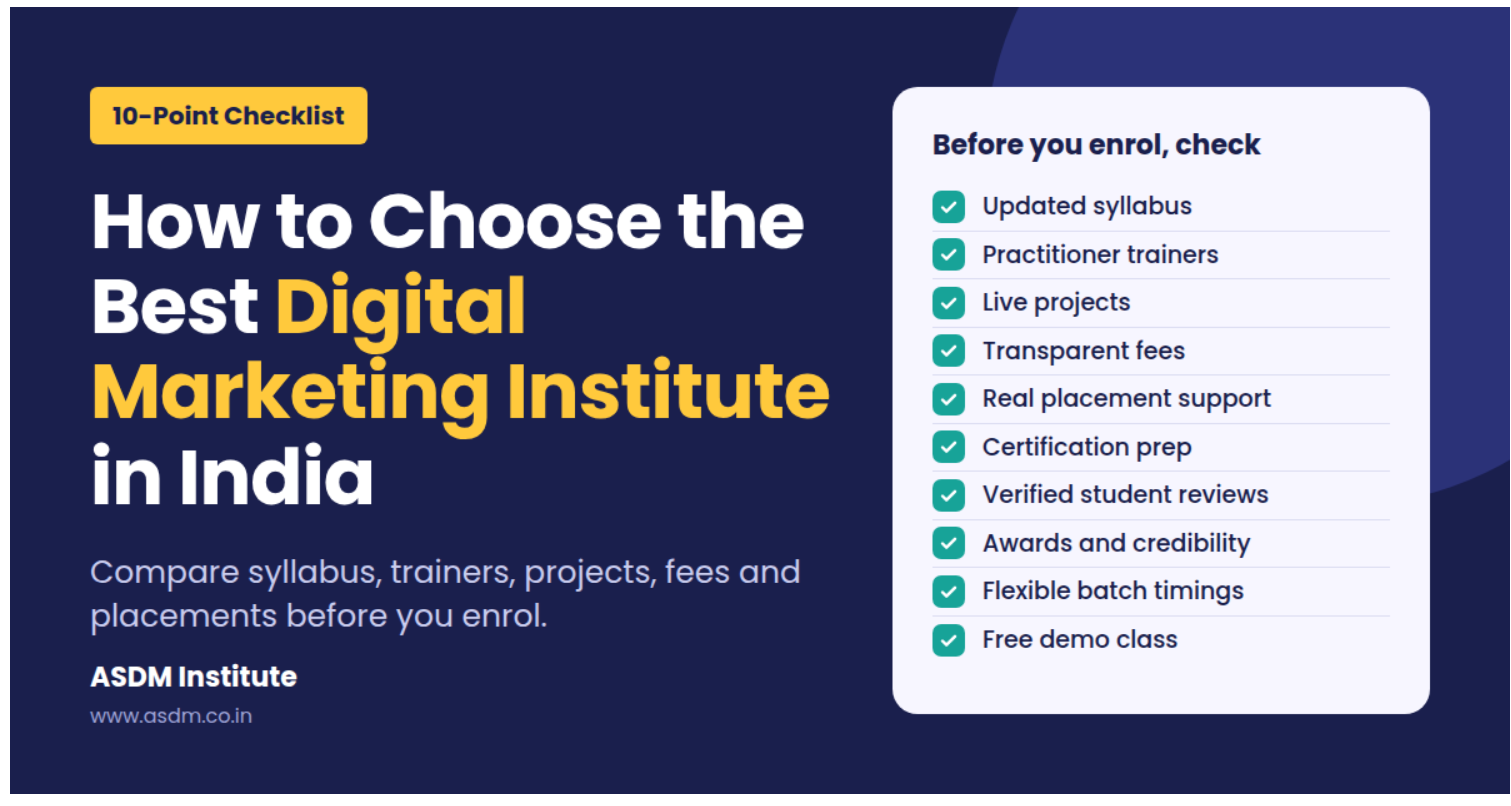
Quick answer: The best digital marketing institute in India is one with an updated syllabus, practitioner trainers, live project work, transparent fees, honest placement support and verifiable student reviews. Check all ten points below before you pay any admission fee.
This guide is written by the team at ASDM Institute, a digital marketing institute that has trained students since 2014. We have counselled thousands of learners, so we know which questions students forget to ask. Use this checklist to judge any institute, including ours.
Key Takeaways
- Digital marketing is a skill-based career, so practical training matters more than theory.
- Ask for proof: sample work, student results, certificate samples and written fee details.
- “Placement assistance” can mean very different things, so ask what support you actually get.
- Visit the campus and attend a demo class before deciding.
Why does choosing the right digital marketing institute matter?
Digital marketing changes quickly. Google updates its search systems, ad platforms add new features, and AI tools now shape how marketers research, write and analyse.
An outdated course leaves you with outdated skills. A good institute teaches you to do the work: run campaigns, read reports and explain results to a client or manager.
1. Does the syllabus cover current digital marketing skills?
Short answer: A good syllabus covers SEO, Google Ads, Meta Ads, social media, content, email, analytics and AI tools, and it is updated regularly.
Look for these modules:
- SEO: on-page, off-page, technical and local SEO
- AEO and GEO: optimising for answer engines and AI-generated search results
- Paid advertising: Google Ads and Meta Ads
- Analytics: Google Analytics (GA4), Google Search Console and Google Tag Manager
- Content and email marketing
- AI tools for research, content and automation
- Freelancing and portfolio building
Red flag: A syllabus that lists only “social media marketing” and “SEO basics,” or one that nobody can show you in writing.
2. Who are the trainers, and have they done real marketing work?
Short answer: Choose trainers who work in marketing or have run real campaigns, not people who only teach from slides.
Ask these questions:
- How many years of hands-on experience does each trainer have?
- Which tools or channels is each trainer an expert in?
- Can you meet the trainers or attend a demo class?
Trainer experience is one of the strongest signals of course quality. A trainer who has managed ad budgets can tell you what goes wrong, not just what the textbook says.
3. Will you work on live projects?
Short answer: Yes, it should. Live projects turn knowledge into skill.
Ask what “live project” means at that institute. Some places only give classroom exercises. Others let you work on real businesses or campaigns.
Ask:
- What will I actually produce (an ad account, a content plan, an SEO audit)?
- Will I get feedback on my work?
- Will I be able to show this work in my portfolio?
Our guide to what to check before enrolling for placement assistance also explains how project work connects to job readiness.
4. Is the course fee transparent?
Short answer: The institute should give you a written fee breakdown, including GST, instalments and exam or certification charges.
Fees vary widely across India. Instead of choosing the cheapest option, compare what is included. For example, at ASDM Ahmedabad:
Programme: Advanced Programme
Duration: 5 months
Modules: 45 modules
Course fee: ₹45,000
Programme: Professional Programme
Duration: 1 year
Modules: 84 modules
Course fee: ₹1,00,000
Fees as listed on the ASDM website; confirm current details with the admissions team.
Red flags: Heavy “limited-time discounts,” fees that change from one counsellor to another, or no written receipt.
5. What does “placement assistance” really include?
Short answer: Real placement support includes resume building, portfolio guidance, mock interviews and connections with hiring companies.
Be careful with phrases like “100% job guarantee.” No institute can honestly control a company’s hiring decision. Ask for specifics instead:
- What percentage of eligible, job-seeking students were placed?
- Which companies hired recently?
- Is there an in-house placement cell?
- What happens if you don’t get placed in the first attempt?
For reference, ASDM reports a 98% placement record among eligible students actively seeking placement, with support through its in-house placement cell. This figure is specific about who is counted, which is the kind of clarity you should expect from any institute.
6. Does the institute prepare you for recognised certifications?
Short answer: Look for preparation for industry certifications such as Google Skillshop and Meta Blueprint, plus a clear institute completion certificate.
Employers value skills first, but certificates help your resume. Ask:
- Which certifications does the course prepare me for?
- Who issues each certificate?
- Are there extra exam fees?
7. What do real students say?
Short answer: Read reviews on several independent platforms, not just the institute’s own website.
Check Google Reviews, Justdial, Trustpilot and UrbanPro. Look at:
- The number of reviews, not only the star rating
- Whether reviews describe specific experiences (trainer, projects, placement)
- How the institute responds to negative feedback
ASDM, for example, holds a 4.9/5 rating from 1,900+ Google reviews in Ahmedabad. You can verify any institute’s claim the same way.
8. Is the institute recognised and credible?
Short answer: Check for years of operation, awards, ISO certification and a visible team.
Credibility signals include:
- Experience: ASDM has been training digital marketers since 2014.
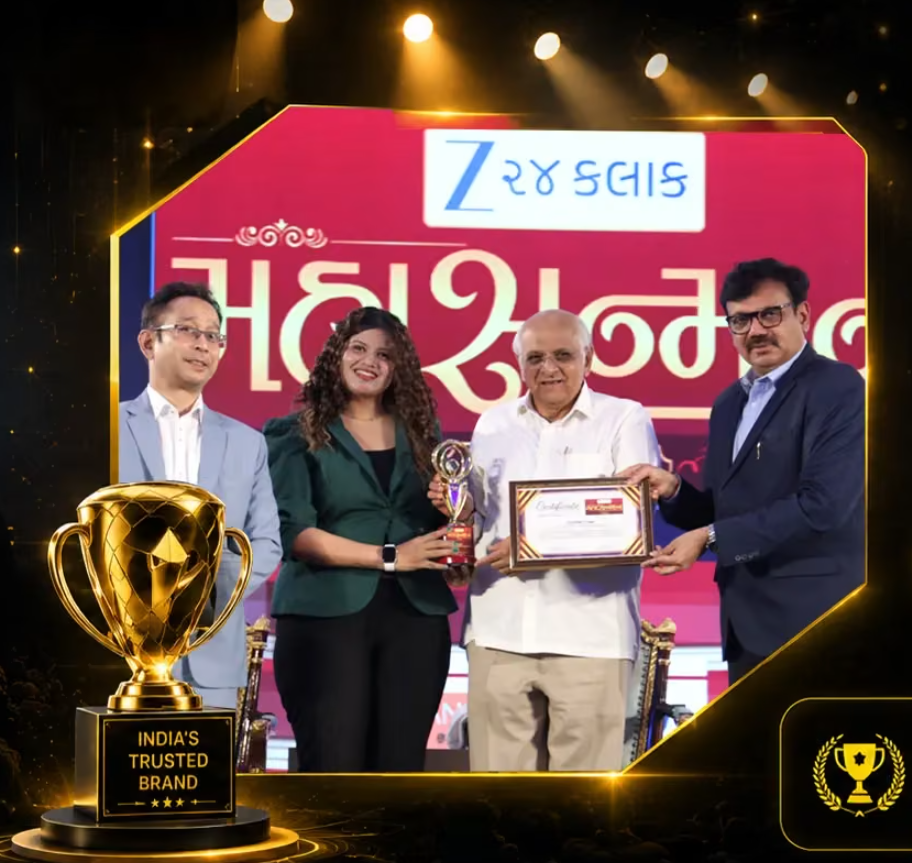
- Awards: ASDM has received recognition every year from 2021 to 2026, including awards from NEBA, Zee Media and Global Icon.
- Quality standards: ISO certification.
- Public leadership: Named founders and directors you can research.
An award alone doesn’t prove quality, but a long record of work, reviews and recognition together builds trust.
9. Does the learning format and batch timing fit your life?
Short answer: Pick a format you can actually attend consistently.
Classroom learning gives more interaction and doubt-solving. Online learning gives flexibility. Many beginners prefer classroom training because they can ask questions immediately.
Check the batch timings. At ASDM, classes run Monday to Friday at 8:00 AM, 11:00 AM, 2:00 PM and 4:00 PM, which suits students and working professionals.
10. Can you visit and attend a demo class first?
Short answer: Always. A demo class reveals teaching style, class size and campus quality.
During your visit, ask to see:
- The classroom and lab setup
- Sample student work or certificates
- The full syllabus in writing
- The fee structure in writing
Trust your experience. If the counsellor avoids direct questions, treat that as a warning.
Quick comparison: good institute vs. risky institute
- Factor
- Good institute
- Risky institute
- Syllabus
- Updated, includes AI and analytics
- Generic, outdated
- Trainers
- Practitioners with real campaign work
- Unclear background
- Projects
- Live, with feedback
- Only theory
- Fees
- Written and clear
- Changing or hidden
- Placement
- Defined support process
- Vague “100% guarantee”
- Reviews
- Many, on multiple platforms
- Few or only on own site
- Demo class
- Encouraged
- Avoided
Frequently Asked Questions
What is the best digital marketing institute in India?
The best institute is the one that matches your goals and passes the checklist above. Compare syllabus, trainers, live projects, fees, placement support and student reviews, then attend a demo class.
How much does a digital marketing course cost in India?
Fees vary by city, duration and depth. A 5-month course can cost roughly ₹30,000 to ₹60,000, and longer programmes cost more. Always ask for the written fee breakdown and what it includes.
How long should a digital marketing course be?
Core courses usually run 4 to 6 months. Advanced programmes can run up to a year, with more modules and project work. Choose based on how much time you can commit.
Is a digital marketing course worth it for beginners?
Yes, if the course teaches practical skills. Beginners can start without prior experience, but should expect to practise through assignments and projects.
Can I get a job right after a digital marketing course?
Many learners find roles such as SEO executive, social media manager or performance marketer. Results depend on your skills, portfolio and effort, and no institute can guarantee a specific job or salary.
Should I choose an online or offline digital marketing course?
Choose offline if you want direct guidance and discussion. Choose online if you need flexibility. The best option is the one you will attend regularly.
Final thoughts
The right digital marketing institute helps you build real skills, a portfolio and the confidence to work. Use these ten points, ask for proof in writing, and compare at least two or three institutes before you decide.
If you are in Ahmedabad or Surat and want to see how a practical, career-focused programme works, you can explore ASDM Institute, compare programmes and book a free demo session.